 From the makers of ...
MAESTOSO ON THE ROAD 1981
By the 12th row back on the right, 3rd seat in, Birmingham Odeon, 11 June 1981.
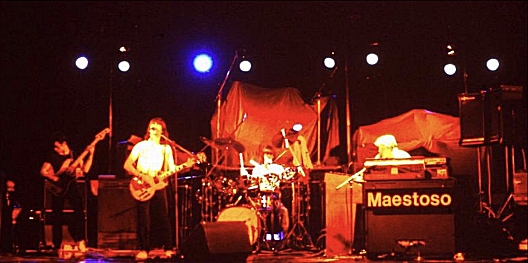
By 1981 I had decided not to renew my subscription to Friends of Barclay James Harvest. With the departure of Jill Wolstenholme, the newsletter had become fairly thin gruel. It was therefore in Record Mirror, in an aside by Robin Smith, a long-standing correspondent usually well-disposed towards BJH, that I read that Woolly Wolstenholme would be going out on the road as the support act for Judie Tzuke in summer 1981. I decided there and then that Woolly would be greeted on 11 June by the entirety of the Birmingham branch of the Woolly Wolstenholme Fan Club, even if it had just one member. I can still see in my mind's eye Maestoso on stage at Birmingham Odeon. They were squeezed onto the left hand side of the stage, Woolly at the front, surrounded by keyboards, and the heavy curtains drawn behind them. They were there for about forty minutes and performed nine songs, five of them unreleased. I decided to let them know that there was a supporter out there in the dark and - to the bemusement of the Judie Tzuke fans around me - called out twice for 'Waveform.' But they didn't hear me … and then they were gone. I didn't stay for Judie Tzuke. Many years later Steve Broomhead, after much lobbying by me, made available a recording of that show. Now forty years have passed since Maestoso clambered aboard their minibus to entertain Judie Tzuke's audience, and it is time to tell that story.
With an album recorded, released and in the shops, Woolly was eager to get on the road. He needed not only to promote the album but also to remain in the public eye to enhance his chances of recording a second album (most of which was already written). He was managed by Danny Betesh of Kennedy Street Artists - with whom he had always had a good relationship - and it was Betesh who put Maestoso forward as the support act for Judie Tzuke's UK tour. Woolly footed the bill for everything - he paid a lump sum to get onto the tour and covered all the costs such as the minibus, wages, equipment and hotels. Woolly's funds, however, could not stretch to employing a tour manager - which meant that he and Jill had to do a great deal of administrative work between gigs. 'He believed in himself and the band, even if no one else did', Jill ruefully recalled.
The band itself was made up of Steve Broomhead (guitar) and Kim Turner (drums and percussion) from the 'Maestoso' recording sessions and Terry Grady (bass). Terry had been a colleague of Kim's in a band called the Fabulous Wonderfuls and at the time was performing with a punk band called the Drones. Of the 'Maestoso' album, Terry recalled, 'I really liked it; I enjoyed playing the songs on tour.'
A great deal of work goes into organising a tour. The band did not even have amplifiers, speakers and other electrical equipment - known as a backline - that gig-goers see behind the musicians on stage. It fell to Jill to sort this out. She remembers spending many hours wiring plug boards and leads! The band gathered in the upper floor of a mungo and shoddy mill - which downstairs was producing cleaning cloths from old rags - in Oldham to rehearse for a week, possibly two. 'There was no high life or glamour at this point', Kim recalls. 'We … (were) surrounded by bags of old rags and castoffs.' And then disaster struck. In a night time burglary all of the electrical equipment that made up the backline was stolen. It had to be replaced - before Woolly knew whether his insurance would cover the theft. 'It was so enjoyable, time just flew by', Terry says now of the rehearsals. 'I always enjoyed lunch, prepared by Jill - my favourite sandwiches, cheese and pickle, and cakes.'
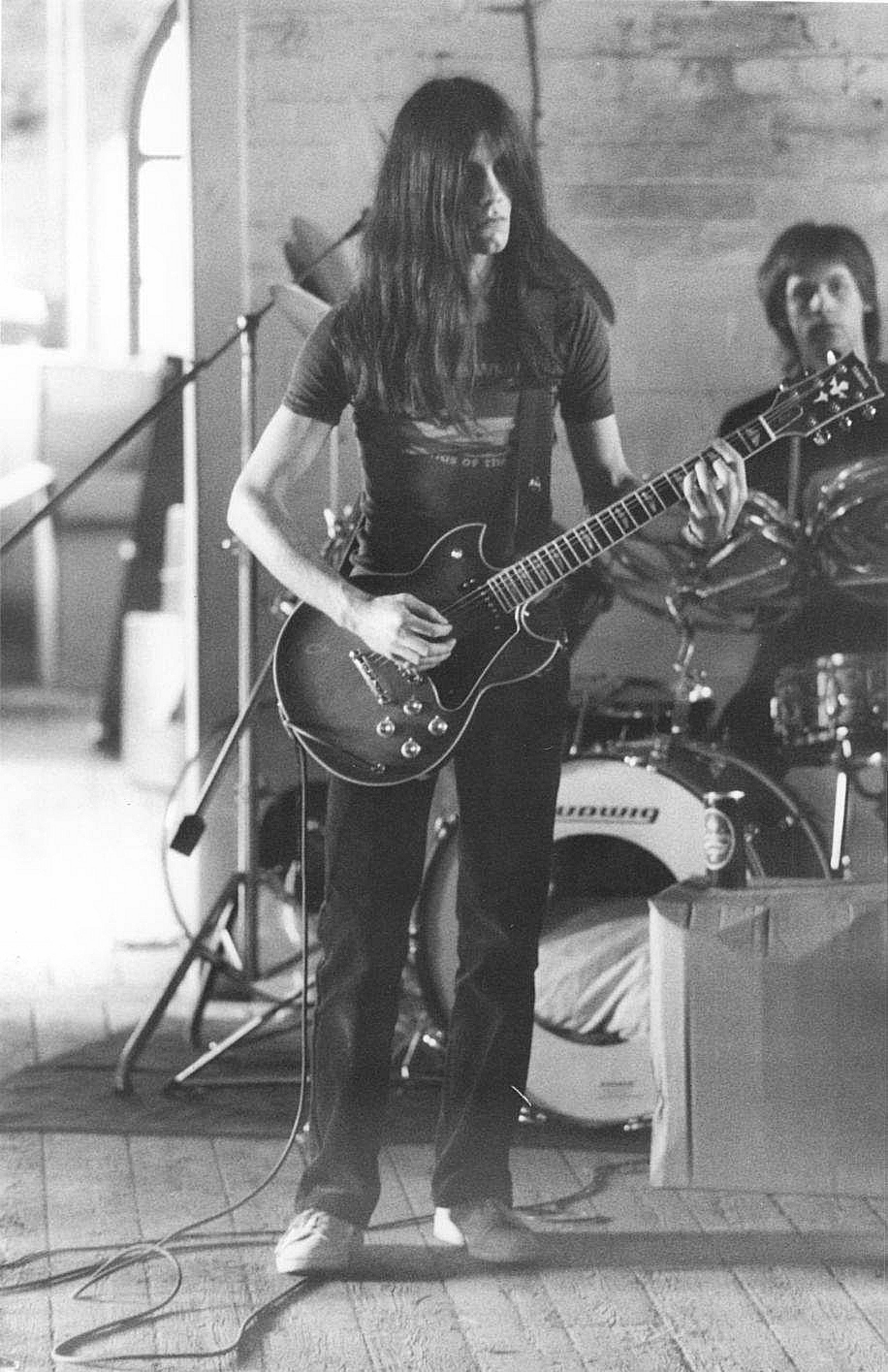
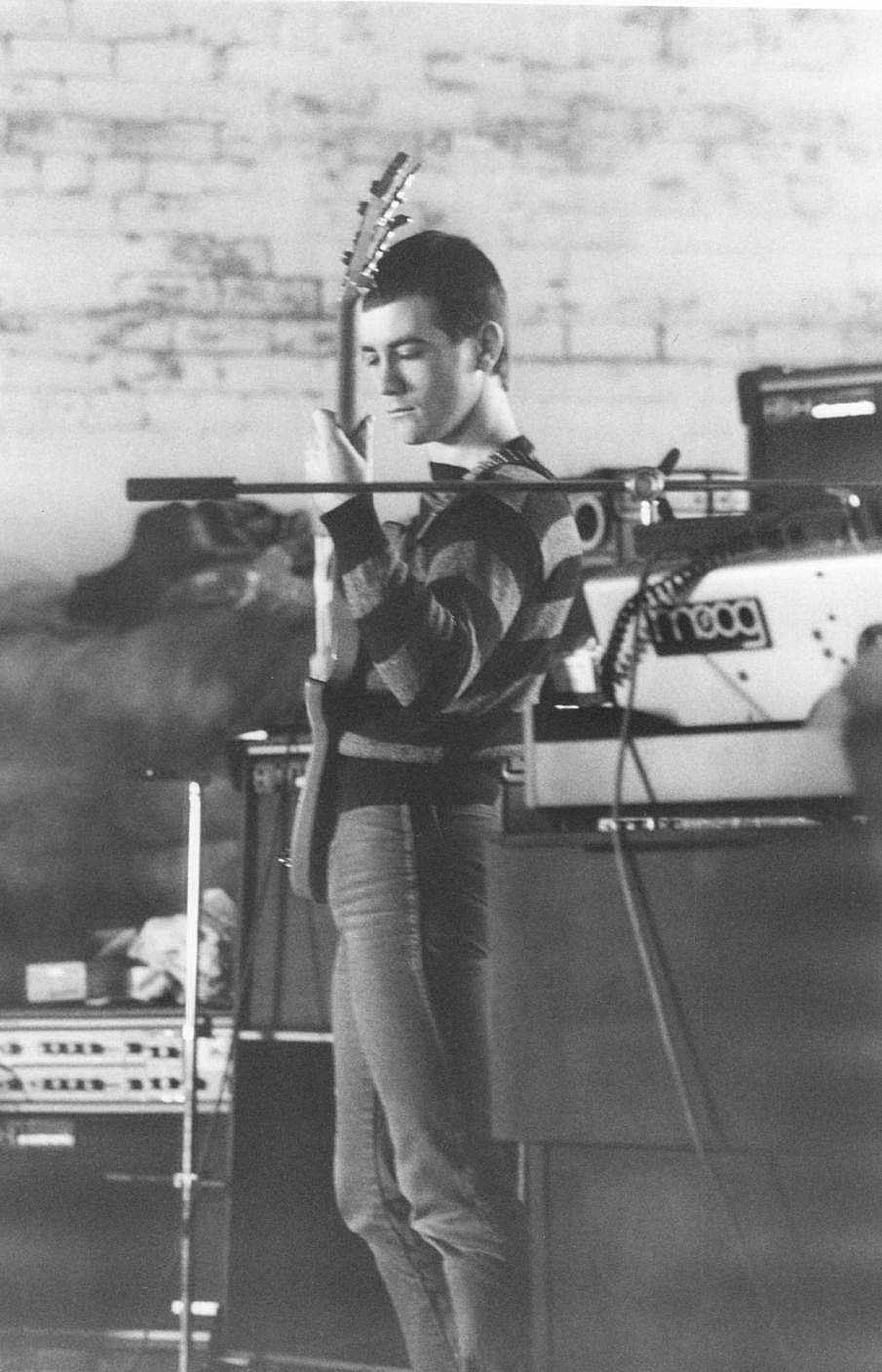
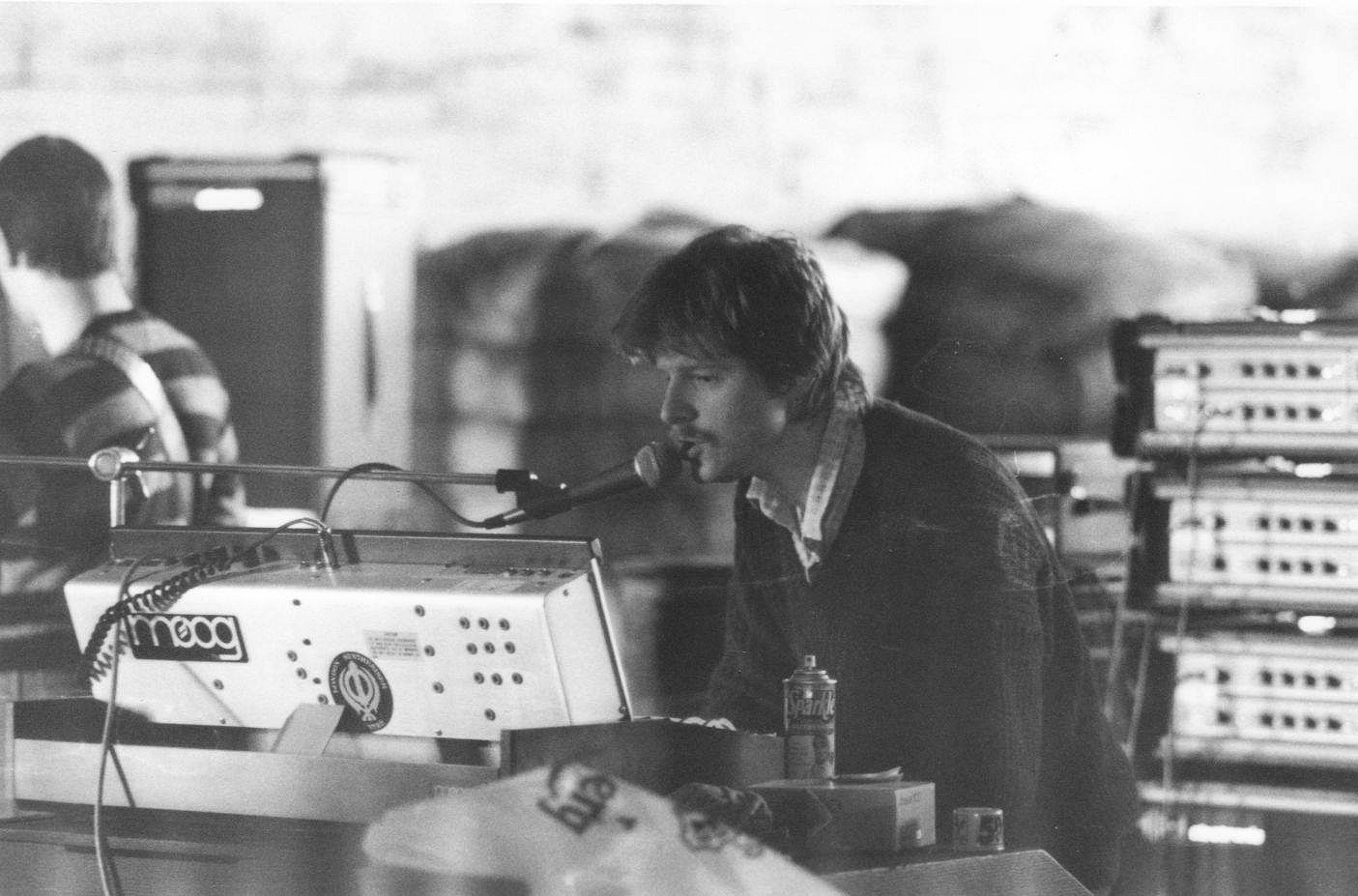 Rehearsals for the Judie Tzuke tour - photos by Jill Wolstenholme (click photos for larger images)
Woolly greatly enjoyed working with Steve, Kim and, later, Terry. He very much wanted the four of them to operate as a band. During rehearsals they wrote their first song. 'Has to be a reason' began as a jam based on a bass riff that Terry had developed. When they gathered together in the morning, the musicians began with this jam. Woolly then added the melody and the lyrics (which reflected on the depression that afflicted him at that time). The song was performed on the tour and was, Jill recalls, 'a great success.' Terry has said that it was one of the songs he most enjoyed playing.
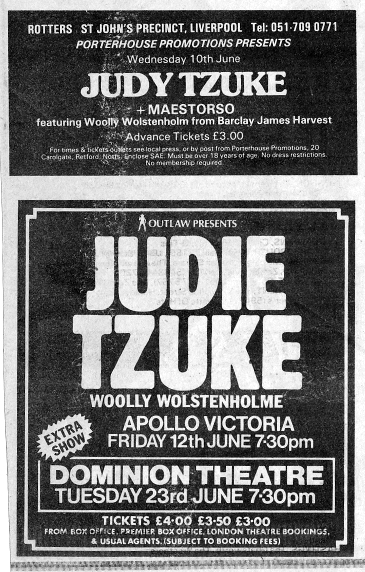
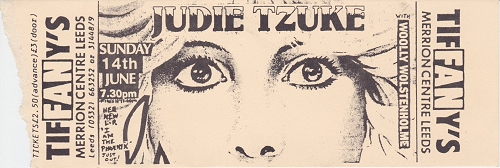
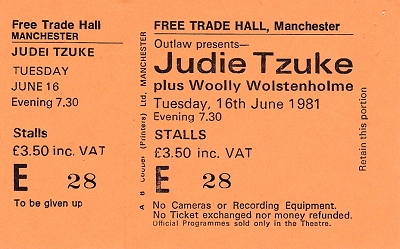
The tour lasted almost a month, from 28 May until 23 June. In total there were nineteen dates, thoroughly covering England, with one gig lined up in Cardiff. Not wanting to wear out Maestoso's welcome on stage, Woolly opted for a relatively short set. The plan was, in Kim's words, 'to put together a lively set that would entertain and excite the crowd and, hopefully, attract some new fans.' This was the set that was decided on:
Too much, too late, too loud; Deceivers all; The iron maiden; Tonight could be the night; American excess; Lives on the line; A prospect of Whitby; In search of England; Has to be a reason.
At some dates - for example, at Birmingham - 'Even the night', a song written whilst Woolly was still in BJH, was substituted for 'In Search of England.' The band had not played together before and this meant that every song had to be rehearsed many times. With his use of a variety of keyboards in the studio, Woolly's songs were not that easy to translate to the stage. 'Too much, too loud, too late' and 'Deceivers all' had not been recorded and gave the musicians the opportunity to add their own stamp. Only three songs from 'Maestoso' were included in the set on the grounds that very few of the audience would have owned a copy of the album. 'Lives on the line' and 'A prospect of Whitby' were performed pretty much as on the album whereas 'American Excess' was slightly speeded up. 'Tonight could be the night' was a song written by Kim which, Jill observes, 'he played to us in the studio and which we loved … (it) was a must.' No provision was made for an encore - and, when the calls were heard for one at some shows, the band performed 'Deceivers all' a second time. Kim certainly wasn't nervous before performances - he had got over that after his first gig at the age of 14 and now 'was always just excited and couldn't wait to be on stage. Size of audience has never intimidated me - the bigger the better in my book!'
Kennedy Street booked the hotels and the band travelled between gigs in a minibus - sometimes distances of hundreds of miles. The minibus was driven by John Allerdyce, who also manned the mixing desk. 'He was a nice lad from the north-east', Jill recalls, 'and did a very creditable job, especially considering he was thrown in at the deep end.' With all the travelling and the occasional sound check, there wasn't a great deal of time off, but, when there was, the musicians went to the cinema or explored the area. 'I tended to walk, seeing the sights of various places we played', Terry remembers. 'I have a passion for old buildings.' Before the gig in Cardiff Terry took the bus to Mumbles, which he remembered as a child. Woolly and Jill 'just mooched around the city, listening to the peacocks crowing in Cardiff Castle.' Kim can't remember too much here - 'maybe that was because of the Bloody Mary's', he notes! There was an unusual escapade in Reading. Jill takes up the story:
'For some reason we were all feeling mischievous and went out in the dark to "steal a boat", but, believe me, I would never have let those naughty boys do that! As it happens, we didn't get too far anyway as I ran underneath a building on the foreshore of the river Thames which was on stilts and neglected to notice that the ground was going uphill and ran smack into a large girder which left me with a bleeding head and slight concussion!'
After Judie Tzuke had finished, the band would often go out to eat. Without a tour manager, Woolly and Jill were left to deal with all the administration. There was paperwork to do and phone calls to make. 'It could be very stressful', Jill recalls. Though he knew things would be different, Woolly didn't find the transition from being a member of the headline act to being the support act easy. The lyrics to 'Has to be a reason' make this clear:
But it's another night and another place,
And I'm pleased enough to know one face.
If it's lonely at the top,
I say it's harder when you drop.
He was greatly cheered when he encountered BJH fans at the gigs, some of whom popped backstage. 'I do remember that, like me, there were a number of staunch BJH fans there who felt the great man really was the star attraction', Alex Torres recalls of the gig in Cardiff. 'Woolly received a rousing reception on entering the stage and gave a fine performance to suit, well worthy of BJH's performances of that time.'
![Steve Broomhead and Terry Grady onstage at Guildford Civic Hall, 28th May, 1981 [photo: Paula Southern] - click for larger image](jpg\1981 Guildford 1, by Paula.jpg "Steve Broomhead and Terry Grady onstage at Guildford Civic Hall, 28th May, 1981 [photo: Paula Southern] - click for larger image")
![Kim Turner onstage at Guildford Civic Hall, 28th May, 1981 [photo: Paula Southern] - click for larger image](jpg\1981 Guildford 2, by Paula.jpg "Kim Turner onstage at Guildford Civic Hall, 28th May, 1981 [photo: Paula Southern] - click for larger image")
![Steve Broomhead onstage at Guildford Civic Hall, 28th May, 1981 [photo: Paula Southern] - click for larger image](jpg\1981 Guildford 3, by Paula.jpg "Steve Broomhead onstage at Guildford Civic Hall, 28th May, 1981 [photo: Paula Southern] - click for larger image")
![Woolly onstage at Guildford Civic Hall, 28th May, 1981 [photo: Paula Southern] - click for larger image](jpg\1981 Guildford 4, by Paula.jpg "Woolly onstage at Guildford Civic Hall, 28th May, 1981 [photo: Paula Southern] - click for larger image")
Maestoso onstage at Guildford Civic Hall, 28th May, 1981 - photos by Paula Southern (click photos for larger images)
When he was with BJH, Woolly always took a friendly interest in the support acts - and so it was with Judie Tzuke's band and Maestoso. Woolly chatted with them from time-to-time, but was careful not to be too intrusive. Terry remembers meeting members of Judie's band in the green rooms, and sometimes having lunch and snacks with them. After the tour he stayed in touch with Judie's drummer Charlie Morgan, who attended a gig he did with the Drones in London. After Maestoso had finished their set, Kim made a point of watching Judie and her band from either the side of the stage or out amongst the audience. 'Judie had a beautiful voice', he recalls, 'and the band were all such talented and accomplished musicians. They put on a fantastic show.' Jill remembers a joke played on Judie which sums up the friendliness of the tour:
'It was felt OK (after a quick word with Judie's manager) to play a little prank on the last night of the tour in Rock City in Nottingham. Part of Judie's set was the song "Black furs" and so we hired a gorilla suit for Terry and, whilst she was singing that song, he crept up behind her and stood there. He then danced to the rest of the song and I am pleased to say that she took it in very good part and in fact everyone was invited onto the stage during the final encore.'
There is no doubt that wondering whether he had a future as a musician on top of all the administrative things to deal with took its toll on Woolly. 'Woolly and I used to refer to a tour being like a sausage machine', Jill recalls. 'You were fed in at one end and came out at the other, but what went on inside was largely forgotten.' Woolly had bought an opportunity to perform before Judie Tzuke's audience and received no payment at all for the tour. He had embarked on a quest to get the band's name known, but it had cost him a sizeable sum of money. Yet, for all the disappointments and problems, Kim remembers that Woolly conducted himself 'as you might expect … like the gentleman he was - with charm, dignity and good humour.'
With the tour over, Woolly and Jill made great, but unsuccessful, efforts to find someone who would get behind the band. Maestoso also returned to the studio and recorded the new songs that they had performed on the tour - 'Too much, too loud, too late', 'Deceivers all', 'Has to be a reason' and 'Even the night' (which they were happy with but were never mixed) and 'Down the line' (which was judged to be inferior to the demo). The band were to play live again, this time supporting Saga in Europe. 'It seemed like a no brainer', Jill recalls, '(but) it was … a much bigger drain on our resources and ultimately did not change much.'
Acknowledgements: I am indebted to Steve Broomhead, Terry Grady, Kim Turner, Jill Wolstenholme, Alex Torres and Keith Domone for their invaluable help in writing this piece.
STEPHEN ROBERTS
Associate Professor Stephen Roberts is an historian. His book Webster & Horsfall & the Atlantic Cable inspired Greg Spawton to write the song 'Atlantic Cable' for Big Big Train.
The Judie Tzuke and Mæstoso Tour, 1981
28.05.81 Guildford Civic Hall
29.05.81 Poole Arts Centre
30.05.81 Oxford University Ball
31.05.81 Croydon Fairfield Halls
02.06.81 Reading Hexagon
03.06.81 Bristol Colston Hall
05.06.81 Cardiff Sophia Gardens
06.06.81 Nottingham Rock City
07.06.81 Norwich University
09.06.81 Leicester De Montfort Hall
10.06.81 Liverpool Rotters
11.06.81 Birmingham Odeon
12.06.81 London Apollo Victoria
14.06.81 Leeds Tiffanys
16.06.81 Manchester Free Trade Hall
17.06.81 Bradford University
18.06.81 Sheffield Polytechnic
19.06.81 Sheffield Polytechnic
23.06.81 London Dominion
25.06.81 Dunstable Queensway Hall
26.06.81 Gloucester Leisure Centre
27.06.81 Nottingham Rock City
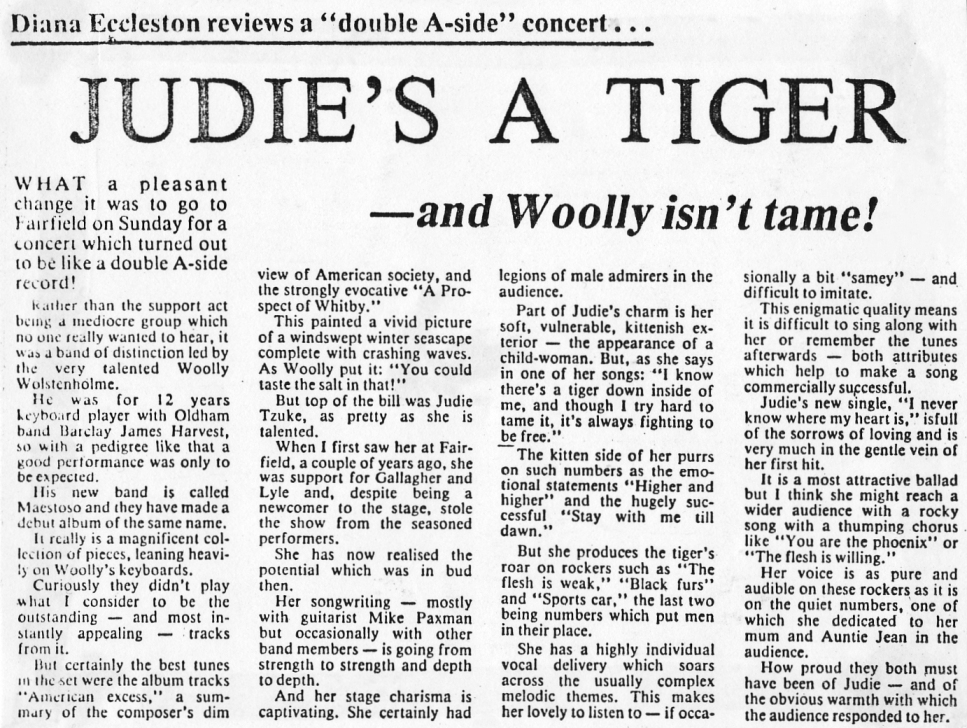
Live review from the Croydon Avertiser, 5th June, 1981 - click for larger version
Listen to Steve Broomhead's recording of the Birmingham show